-
UID: 1569053 
-
- 注册时间2012-06-21
- 最后登录2026-10-06
- 在线时间26706小时
-
- 发帖205992
- 搜Ta的帖子
- 精华2
- 金币857135
- 道行19600
- 原创770
- 奖券621
- 斑龄0
- 道券30
- 获奖0
-
访问TA的空间加好友用道具

UID: 1569053
- 发帖
- 205992
- 金币
- 857135
- 道行
- 19600
- 原创
- 770
- 奖券
- 621
- 斑龄
- 0
- 道券
- 30
- 获奖
- 0
- 座驾
-
- 设备
-
- 摄影级
-
在线时间: 26706(小时)
注册时间: 2012-06-21
最后登录: 2026-10-06
|
—
本帖被 xgch 执行加亮操作(2026-04-22)
—
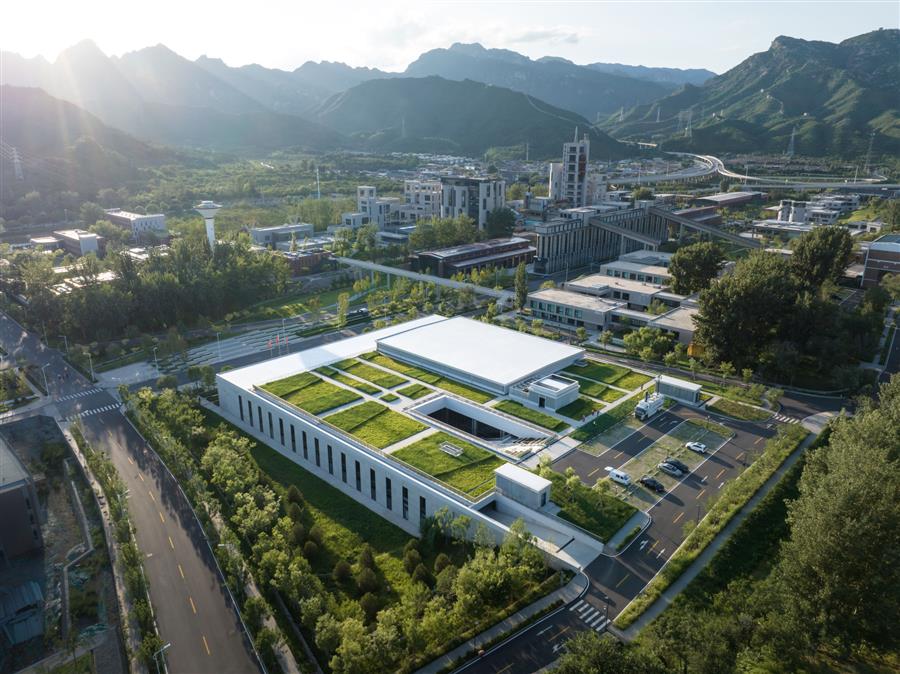
设计单位
HPP建筑事务所+ BIAD
地址
北京
建筑面积
182200 m²
项目年份
2025
摄影
AST Studio - BIAD, AST Studio
金隅兴发科技园是由北京怀柔科学城的一座水泥厂改造而成的国际前沿研发园区。多功能科学园占地约36公顷,其特点是保存了54栋建筑。
The Jinyu Xingfa Science Park has emerged as a campus for international cutting-edge research and development through the transformation of a former cement factory in Huairou Science City, Beijing. The multifunctional science park covers an area of approximately 36 hectares and is characterized by the preservation of 54 buildings.
这些建筑经过改造和重新利用,形成了新的建筑,成为北京数学科学研究所。新园现在逐渐恢复生机,里面有实验室、研究设施以及供研究人员和学生使用的住宅单元。
These structures have been revitalized and repurposed, with precisely integrated new constructions, to become the Beijing Institute for Mathematical Sciences. The new park, now gradually coming to life, houses laboratories, research facilities, and residential units for researchers and students.
该设计代表了可持续的复兴,讲述了基地的工业故事,并延续了它的遗产。它整合了贯穿场地南北的货运铁路,作为景观和文化的重要骨干,连接了所有功能区:雁栖湖应用数学研究所、管理区、研究所、专家工作室区和办公孵化器。
The design represents sustainable revitalization, telling the site's industrial story and continuing its legacy. It integrates the freight railway running north to south through the site as a landscape and culturally significant backbone, connecting all functional zones: the Yanqi Lake Institute of Applied Mathematics, a management area, a research institute, an expert studio area, and an office incubator.
为了实现最大限度保护的指导原则,必须单独对待每座建筑的结构和特征,并制定量身定制的解决方案。这包括将锥形帐篷仓库改造成多功能展厅,将石灰石均质筒仓改造成大型实验室,将带廊和仓储建筑改造成教学楼,将水泥装袋平台改造成科学档案博物馆。
To fulfill the guiding principle of maximum preservation, it was essential to treat each building's fabric and character individually and to develop tailor-made solutions. This included the transformation of the conical tent warehouse into a multifunctional exhibition hall, the limestone homogenization silo into a large laboratory, the belt corridor and storage building into a teaching building, and the cement bagging platform into a scientific archive museum.
最艰巨的任务之一是将新的住宅功能整合到现有的大型筒仓结构框架中,辅以休息区、日常便利店、餐厅和会议设施。
One of the most demanding tasks was incorporating new residential functions into the framework of the existing large-scale silo structure, complemented by lounge areas, daily convenience shops, restaurants, and conference facilities.
为了配合新的功能,图书馆、大型演讲厅、体育馆、数学家工作室、展厅和员工自助餐厅都被添加进来。图书馆采用阶梯式设计,连接三层,创造多样化的活动平台。讲堂遵循山的轮廓,包含各种礼堂和多功能空间。
In line with the new functions, a library, a large lecture hall, a gymnasium, a mathematician's studio, an exhibition hall, and a staff cafeteria have been added. The library adopts a stepped design, connecting three levels and creating diverse activity platforms. The lecture hall follows the mountain's contours and contains various auditoriums and multifunctional spaces.
数学家体育馆是体育活动的主要场所。现在,该项目将一个曾经崎岖不平、难以进入的工业基地变成了一个充满活力、多功能的科学园区,为生活、学习和工作提供了一个有吸引力的、面向自然的环境。
The Mathematicians' Gymnasium serves as the primary space for sports activities. Now, the project has turned a once rugged, inaccessible industrial site into a vibrant, multifunctional science park offering an attractive, nature-oriented environment for living, learning, and working.
项目图纸▲平面图 ▲剖面图
设计单位
Selgascano
地址
上海
建筑面积
14500平方米
西班牙建筑工作室Selgascano设计的泗泾镇体育中心在上海郊区获得了二等奖,被认为是一个可持续的、人性化的地标性建筑。该项目规划在交通路线和绿色走廊之间,强调可达性和积极的机动性,将慢跑道、自行车道和附近的公园连接到一个更广泛的健康公共空间网络中。
The Sijing Town Sports Center, designed by Spanish architecture studio Selgascano, has won second prize for a site on the outskirts of Shanghai and conceived as a sustainable, human-scale landmark. Planned between transport routes and green corridors, the project emphasizes accessibility and active mobility, linking jogging paths, bike trails, and nearby parks into a wider network of wellness-focused public space.
与周围高密度的发展形成对比,体育中心引入了一种植根于开放和景观融合的建筑语言。设计避免了垂直优势,而是将其分散在一系列低矮、透明的亭子上,这些亭子有大量的ETFE屋顶。每个体量都被绿色植物包围,使项目与自然环境保持一致,并为天际线的速度和规模创造了平静的平衡。
In contrast to the surrounding high-density developments, the sports center introduces an architectural language rooted in openness and landscape integration. The design avoids vertical dominance, instead dispersing its program across a series of low, transparent pavilions with voluminous ETFE rooftops. Each volume is enveloped in greenery, aligning the project with the natural environment and creating a calm counterbalance to the speed and scale of the skyline beyond.
Selgascano从中国传统水乡中汲取灵感,设计了四京镇体育中心展馆的布局。在这里,桥梁、庭院和步道构成了日常生活。这些元素作为空间节奏出现在这里,将室内活动与室外流通联系起来,在支持社区使用的同时加强文化的连续性。通过拥抱地面平面,建筑师优先考虑人类尺度和感官参与,而不是一个不受街道欢迎的纪念性形式。
With the layout of the Sijing Town Sports Center’s pavilions, Selgascano draws inspiration from traditional Chinese water towns. Here, bridges, courtyards, and walking paths structure daily life. These elements appear here as spatial rhythms that connect interior activity with outdoor circulation, reinforcing cultural continuity while supporting community use. By embracing the ground plane, the architects prioritizes human scale and sensory engagement over a monumental form that feels unwelcoming from the street.
尽管如此,两个雕塑和有机体量仍然是项目的焦点。它们流畅的几何形状和大胆的存在建立了一个可识别的身份,同时保持与水平构图一致。这种平衡使体育中心作为地标而不依赖于大小,而是通过材料、比例和氛围产生共鸣。
Still, two sculptural and organic volumes serve as the project’s focal points. Their fluid geometry and bold presence establish a recognizable identity while remaining consistent with the horizontal composition. This balance allows the sports center to act as a landmark without relying on size, instead generating resonance through materiality, proportion, and atmosphere.
泗泾镇体育中心被组织成不同的区域,用于游泳、多功能运动场和羽毛球,每个区域都设计有很强的室内外联系。被动式策略和智能技术支持气候控制和运营效率,而材料面板则突出了环境性能。ETFE膜、回收格子呢、木材元素和低voc饰面都有助于项目的可持续发展目标。
The Sijing Town Sports Center is organized into distinct zones for swimming, multi-sport courts, and badminton, each designed with strong indoor-outdoor connections. Passive strategies and smart technologies support climate control and operational efficiency, while the material palette foregrounds environmental performance. ETFE membranes, recycled tartan, timber elements, and low-VOC finishes all contribute to the project’s sustainability goals.
日光被精心地融入到设计中,在白天使用时创造出明亮而充满活力的室内空间。到了晚上,人工照明将亭子变成景观中的发光灯塔。这种双重性强化了建筑的公民角色,确保中心全天保持可见和可达的朝向。
Daylight is carefully integrated into the design, creating bright and animated interiors during daytime use. At night, artificial illumination transforms the pavilions into glowing beacons within the landscape. This duality reinforces the building’s civic role, ensuring that the center remains a visible and accessible point of orientation throughout the day.
|


